Project SODOR
Train station safety system combining inflatable gap-bridging and computer vision monitoring
Overview
Project SODOR (named after a certain fictional railway) was a 5-person interdisciplinary engineering project completed for the EG5104 module at the University of Gloucestershire. The project developed a novel dual-purpose safety system for the platform-train interface (PTI) — combining a pneumatic gap-bridging prevention system (FATAB) with a computer-vision-based incident mitigation system.
The Problem
Incidents at the gap between trains and platforms cause serious injuries and fatalities each year. Existing solutions like platform screen doors are prohibitively expensive (£20,000+/m) and difficult to retrofit into older stations. No current system addresses both prevention and post-incident response in a unified package.
The Solution
The SODOR system comprises two subsystems:
- FATAB (Prevention): Modular electro-pneumatic airbags mounted on Unistrut channels along the platform edge. They inflate when a train arrives to bridge the gap, and deflate on departure. Designed to support the 98th percentile human weight +20%.
- Computer Vision (Mitigation): Camera-based ML detection of people on the tracks, feeding alerts to a human operator interface and integrating with existing rail safety infrastructure.
My Contributions
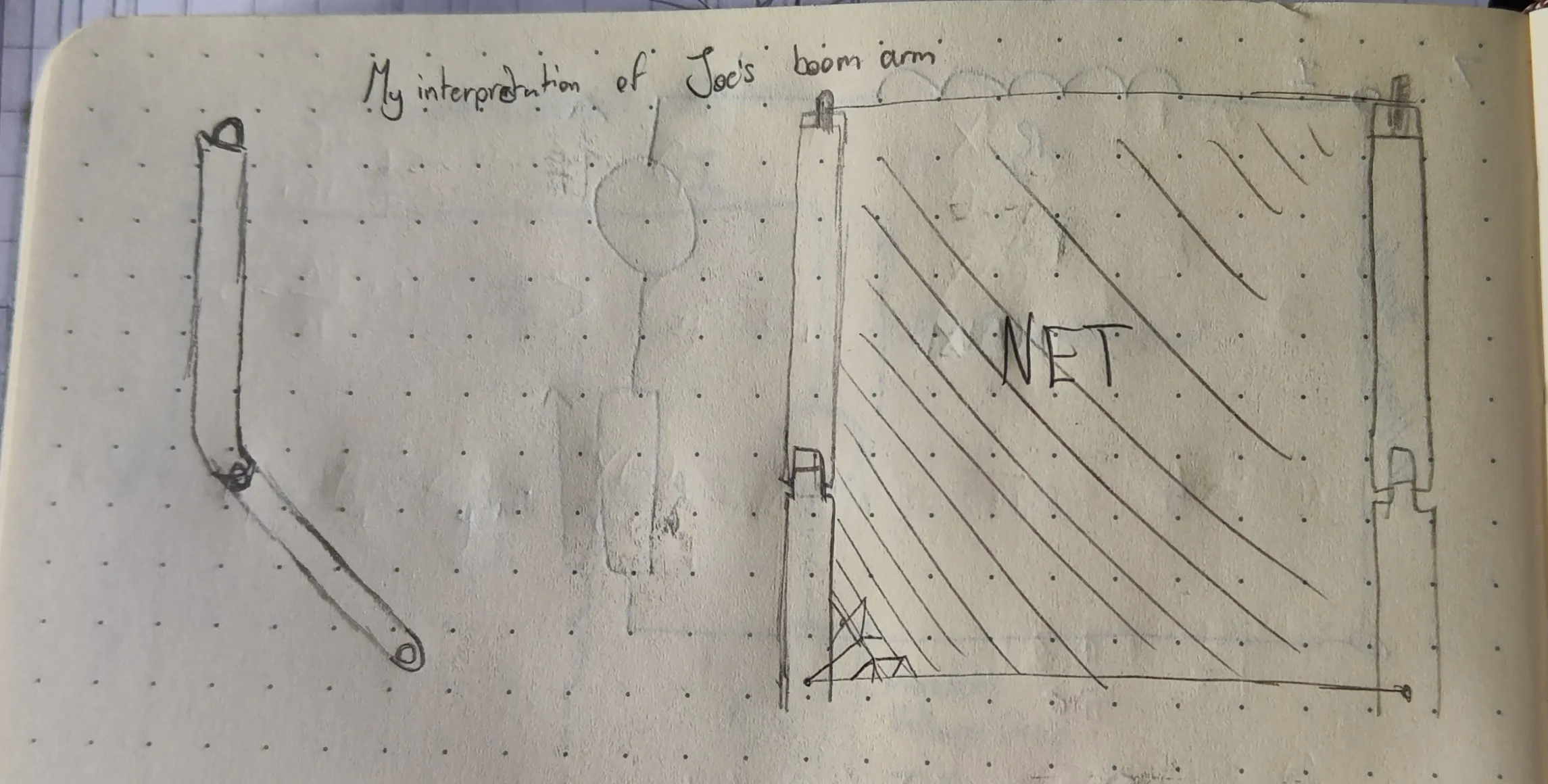
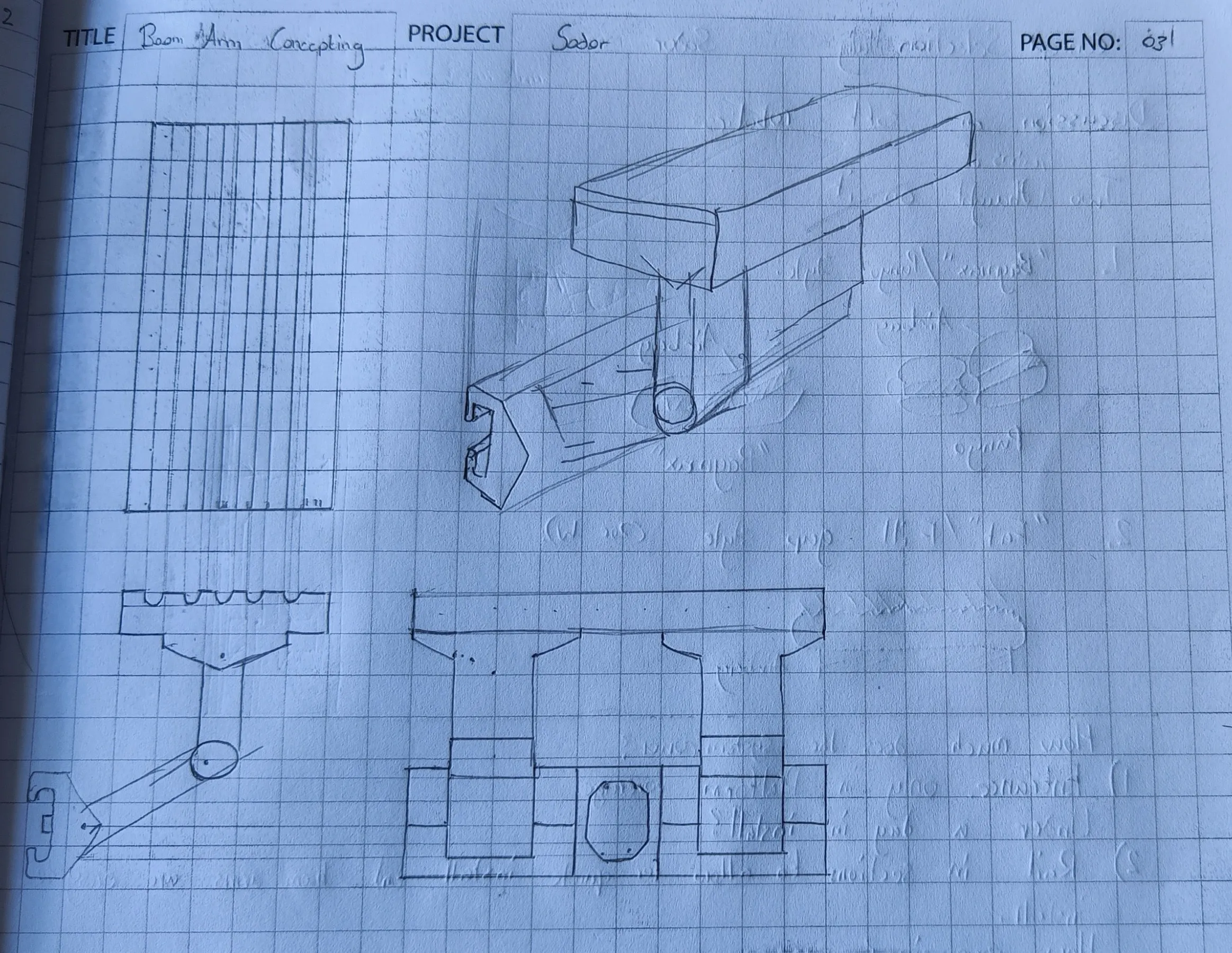
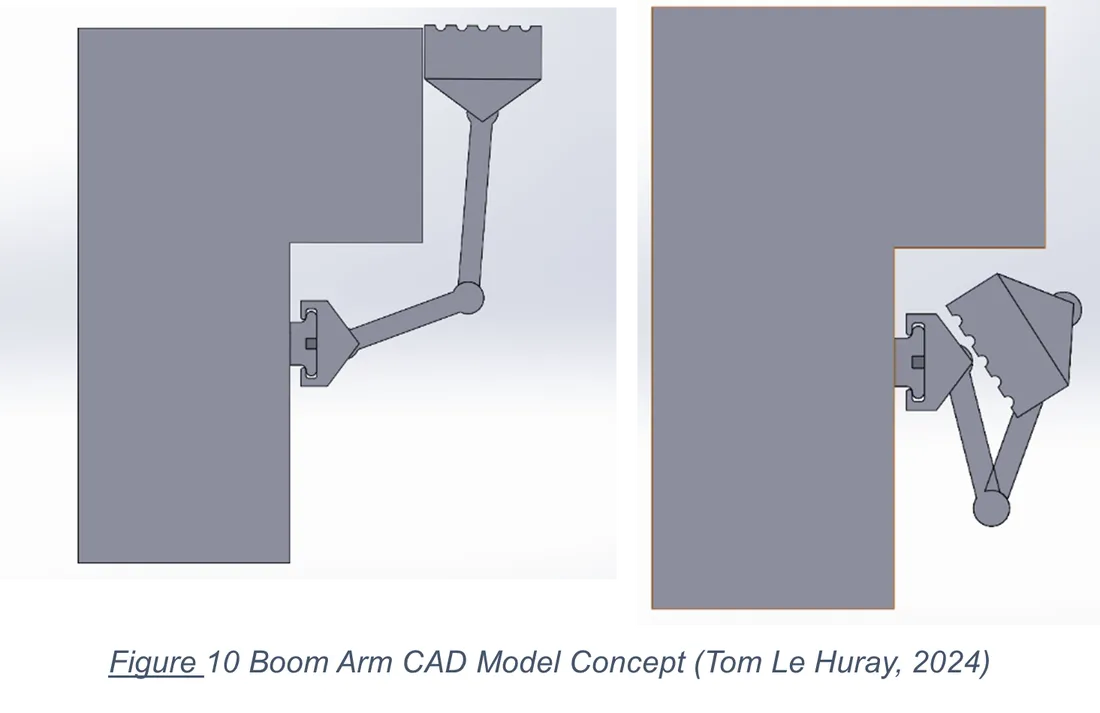
- Boom-arm concept development — sketched, developed, and CAD-modelled an early prevention concept using articulated armatures on a rail system, which informed the final design direction.
- Branding & project infrastructure — created the Project SODOR logo, set up the shared file system, and authored meeting minute templates.
- Quality aspects analysis — authored the quality engineering section covering installation ease, maintenance philosophy, noise compliance (HSE <50 dB target), visual integration with station environments, and conformance to UK/EU standards.
- FMEA & simulation — contributed to initial FMEA-based program development and experimented with a simulated model of the verification prototype.
- Project management support — assisted with scheduling, presentation refinement, and proof-reading the final group report.
Key Outcomes
- FATAB scored highest across all prevention concepts in a weighted Pugh matrix evaluation.
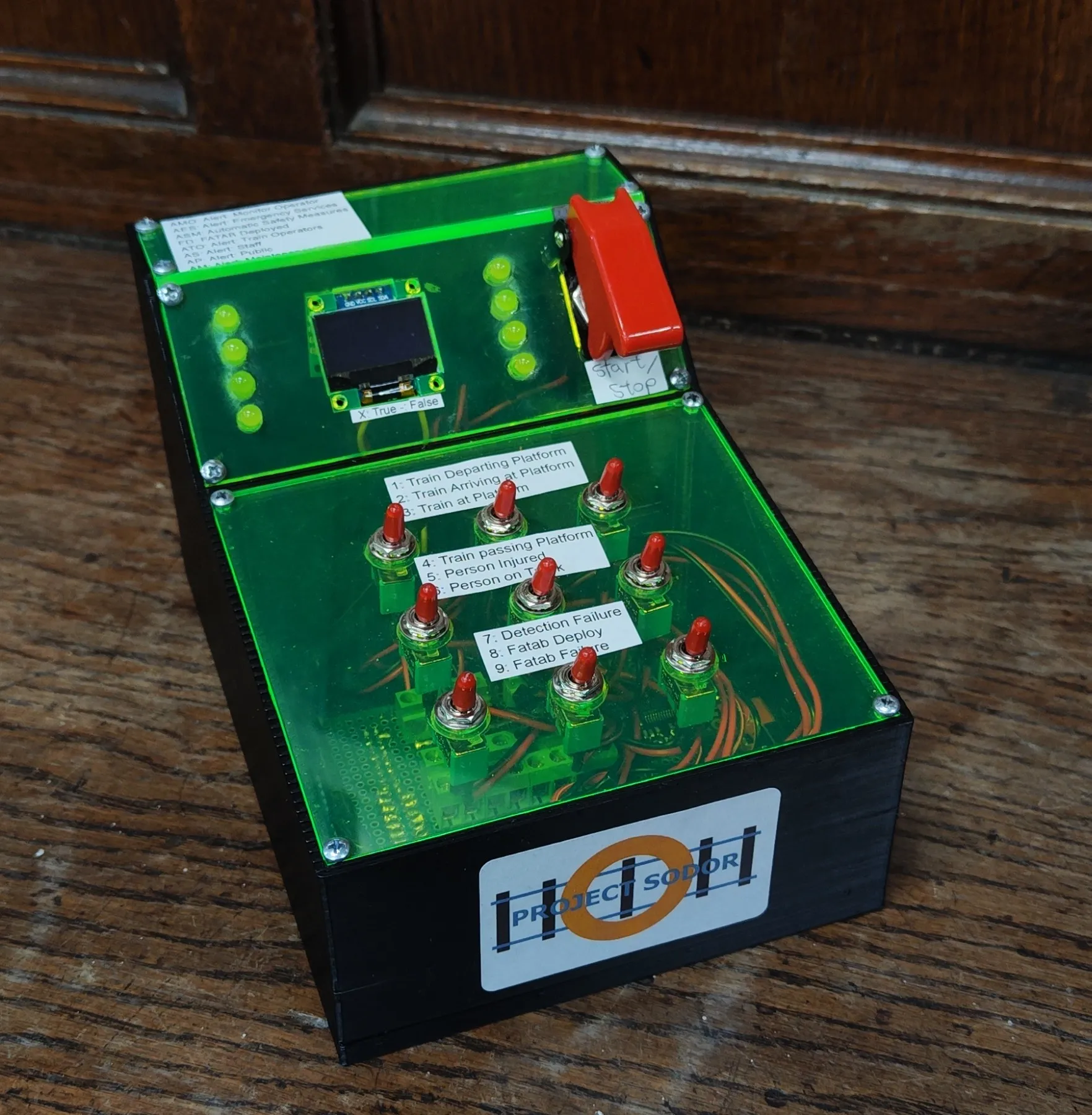
- Verification prototype (Arduino-based logic testbench) achieved 100% functional validation of the system’s input/output relationships.
- Estimated cost of ~£23,300 per 18 m platform sector — significantly below platform screen door alternatives.
Skills Developed
- Systems engineering design process (objective trees, QFD, black/white box diagrams, Pugh matrices)
- SOLIDWORKS CAD and FEA stress analysis
- Safety-critical design thinking (EN50126/50128/50129 awareness)
- Interdisciplinary team collaboration and project management